

Identifying the best markets for rental properties is a critical first step for any real estate investor. The right location can lead to consistent cash flow and long-term appreciation, while the wrong one can result in vacancies and financial strain. Success in real estate investing hinges on understanding the economic and demographic trends that drive rental demand. As noted by real estate analyst Robbie LaMattina, "Investors succeed when they follow the data, not just the headlines. Population growth, job creation, and affordability are the trifecta of a sustainable rental market."
This guide offers a data-driven look at the top markets for real estate investment today, moving beyond generic advice to provide actionable insights. We'll explore diverse opportunities, from bustling tech hubs to stable college towns, helping you pinpoint locations where demand is high, regulations are favorable, and your return on investment can be maximized.
Key Takeaways
- Data Over Hype: Focus on fundamental metrics like job growth, population trends, cap rates, and rental yields rather than chasing short-term market buzz.
- Market Diversity: Profitable opportunities exist across various market types, including high-growth Sunbelt cities, stable Midwest towns, and niche markets like college and retirement communities.
- Regulatory Awareness: Landlord-tenant laws vary significantly by state and city. Understanding local regulations is crucial for mitigating risk and ensuring profitability.
- Neighborhood-Level Analysis: Macro-level city data is a starting point, but granular, neighborhood-specific analysis is required to identify the best assets and avoid underperforming pockets.
1. High-Growth Sunbelt Markets
The Sunbelt region, stretching across the South and Southwest United States, has become a powerhouse for real estate investors. These metropolitan areas are magnets for population and capital, driven by robust job growth, a lower cost of living compared to coastal hubs, and a desirable lifestyle. For investors seeking both cash flow and long-term appreciation, these are some of the best markets for rental properties today. The core strategy here involves investing in areas with strong, sustained economic and demographic tailwinds, which translates directly into high rental demand and rising property values.
Why Sunbelt Markets Excel
The appeal of Sunbelt cities like Austin, Texas; Charlotte, North Carolina; and Phoenix, Arizona lies in their dynamic economies. Austin's tech boom, Charlotte's expansion as a major banking center, and Phoenix's consistent population influx create a constant stream of new renters, many of whom are well-qualified professionals. This influx supports steady rent growth and keeps vacancy rates low. Investing here means you are positioning your assets in the path of progress, capturing value as these cities continue to mature.
Key Insight: As noted by real estate expert Robbie LaMattina, "Investing in a Sunbelt market isn't just a bet on a single property; it's a strategic investment in a region's entire economic trajectory. The key is to get in before infrastructure and amenities fully catch up to the population growth."
Actionable Investor Tips
To succeed in these competitive markets, a targeted approach is essential:
- Prioritize Job Market Diversity: Look beyond the headline industry. A city with growth in tech, healthcare, and logistics is more resilient than one dependent on a single sector.
- Focus on Employment Corridors: Pinpoint neighborhoods with convenient commutes to major employment centers. Investing in single-family homes or small multi-family units in well-regarded school districts on the outskirts of these job hubs can attract long-term family tenants.
- Monitor Development Pipelines: Rapid growth can lead to oversupply. Keep an eye on local news and city planning reports to avoid buying in a submarket that is about to be saturated with new apartment complexes.
- Build Local Relationships: Before you even make an offer, connect with a reliable, local property management company. Their on-the-ground knowledge is invaluable for navigating landlord regulations and securing quality tenants.
2. College Town Rental Markets
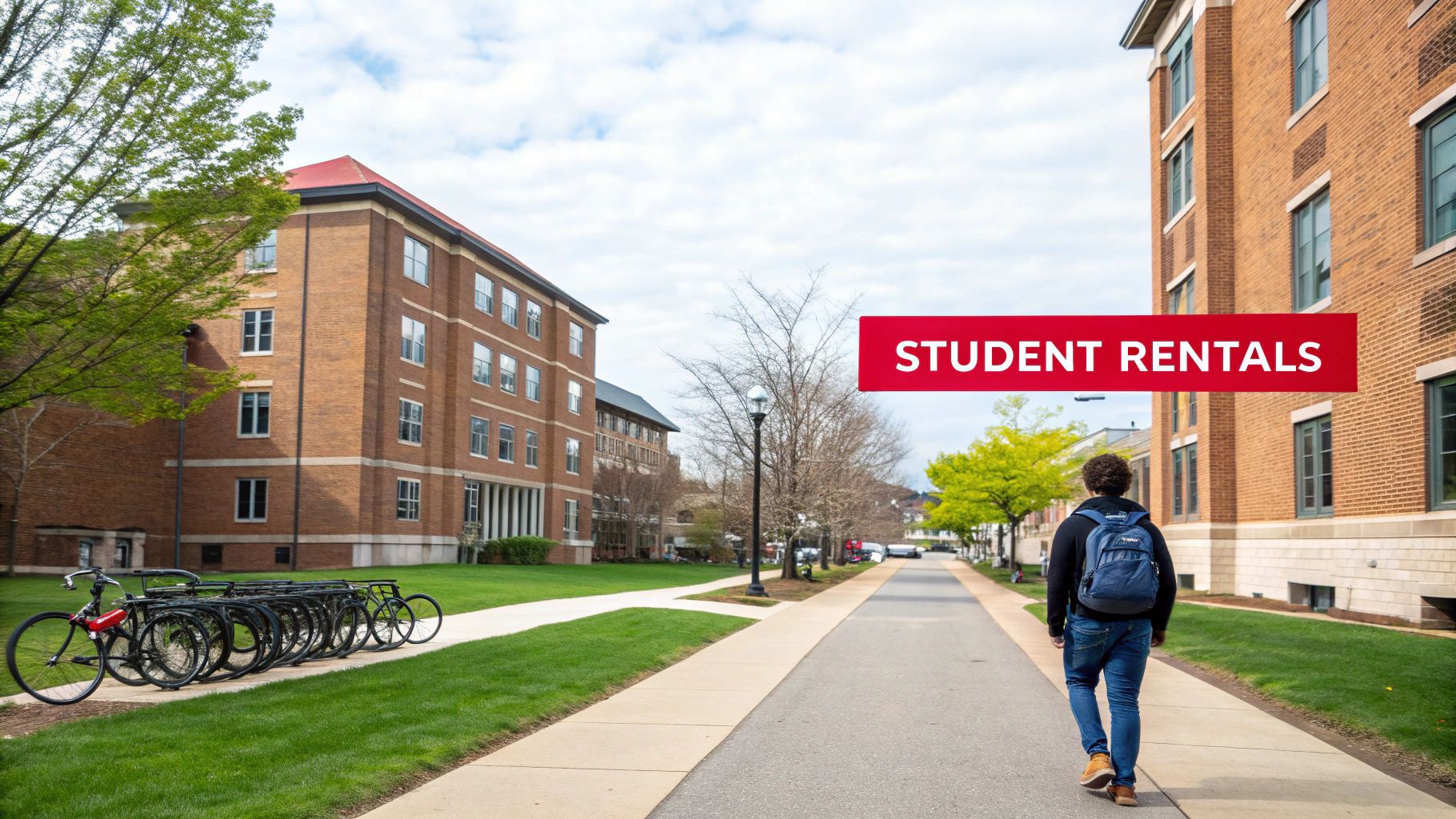
University-centered communities offer a unique and compelling investment thesis built on consistent, predictable demand. These towns revolve around major educational institutions, creating a perennial pool of tenants from students, faculty, and support staff. For investors who prioritize steady occupancy and predictable leasing cycles over explosive appreciation, these are some of the best markets for rental properties. The strategy here is to tap into a stable ecosystem where the primary economic driver, the university, provides a constant influx of renters year after year.
Why College Town Markets Excel
The power of college towns like Madison, Wisconsin; Gainesville, Florida; and College Station, Texas lies in their recession-resistant nature. While other markets may fluctuate with broader economic trends, universities tend to maintain stable or even growing enrollment, ensuring a consistent tenant base. This built-in demand keeps vacancy rates low and provides landlords with significant leverage, particularly for properties within walking or biking distance of campus. Investing here means you are insulated from many market volatilities, capturing value from a reliable and recurring customer base.
Key Insight: As noted by real estate expert Robbie LaMattina, "The beauty of a college town is its predictability. You know when your peak leasing season is, you know who your target tenant is, and you can structure your entire operation around the academic calendar. It’s a formula that, when executed well, generates dependable cash flow."
Actionable Investor Tips
To maximize returns and minimize headaches in student-heavy markets, a specialized approach is crucial:
- Design for Student Lifestyles: Focus on properties with multiple bedrooms of similar size, robust high-speed internet, and durable finishes. Adding amenities like in-unit laundry and designated study nooks can command premium rents.
- Implement a Guarantor System: Mitigate the risk of renting to students with limited credit history by requiring a parent or guardian to co-sign the lease. This practice is standard in college towns and provides a strong financial backstop.
- Plan for Summer Vacancy: The summer months can be challenging. Plan ahead by offering 10-month leases at a slightly higher rate or marketing your units for short-term summer rentals to graduate students or program attendees.
- Prioritize Property Management: Student rentals experience higher wear and tear. Partner with a property manager experienced in high-turnover rentals who can efficiently manage repairs, cleanings, and the leasing rush that occurs each year. To properly evaluate these factors, you can get a better understanding of how to analyze these specific markets with a real estate market analysis template.
3. Tech Hub Gateway Cities
As primary tech centers like San Francisco and Seattle become increasingly unaffordable, a new category of real estate opportunity has emerged: Tech Hub Gateway Cities. These are metropolitan areas that serve as secondary markets, attracting tech companies and professionals with a lower cost of living, reduced business expenses, and a high quality of life. For investors, these cities represent some of the best markets for rental properties because they capture the overflow of talent and capital from more expensive hubs, creating a powerful combination of high rental demand from well-paid tenants and a more accessible entry point for property acquisition.

Why Tech Gateways Excel
The success of cities like Raleigh, North Carolina; Denver, Colorado; and Boise, Idaho is directly tied to the tech industry's decentralization. Raleigh benefits from its proximity to the Research Triangle Park, Denver has cultivated a thriving startup ecosystem, and Boise has become a prime destination for tech company relocations. This economic shift creates a steady stream of renters, including remote workers and employees of newly established corporate campuses, who seek modern amenities and high-speed connectivity. Investing here allows you to cater to a demographic with stable, high-paying jobs, which translates to lower tenant turnover and consistent rent payments.
Key Insight: As noted by real estate expert Robbie LaMattina, "The rise of remote work has fundamentally changed the game. Gateway tech hubs offer the perfect blend of career opportunity and lifestyle affordability. Investors who can provide the infrastructure these tech professionals demand, like fiber internet and co-working spaces, will win in these markets."
Actionable Investor Tips
To capitalize on the growth in these tech-forward cities, a strategic focus is crucial:
- Prioritize Digital Infrastructure: Target properties or neighborhoods with access to fiber optic internet. High-speed, reliable connectivity is a non-negotiable amenity for tech professionals and remote workers.
- Offer Work-From-Home Amenities: If investing in multi-family units, consider adding modern co-working spaces, private work pods, or smart-home features. For single-family rentals, highlight a dedicated home office space in your listings.
- Monitor Corporate Relocations: Follow business news to track which major tech companies are opening new offices or relocating their headquarters. Buying rental properties in advance of a large corporate move can lead to significant appreciation and high demand.
- Market to Remote Workers: Use online platforms and listing descriptions that specifically target the remote tech workforce. Emphasize features like "gigabit internet included," "Zoom-ready office nook," and proximity to coffee shops and green spaces.
4. Industrial-Adjacent Urban Markets
Often overlooked, the urban cores of America's former industrial heartland are undergoing a powerful transformation, making them some of the most compelling and best markets for rental properties. These revitalized areas, located near historical manufacturing, logistics, and industrial hubs, are experiencing a demographic shift. They are now attracting a new wave of younger, creative-class professionals and artisans drawn to authentic urban character, unique architecture, and relative affordability. This trend creates a ground-floor opportunity for investors to acquire assets with significant value-add potential.
Why Industrial-Adjacent Markets Excel
The core appeal of these markets, including neighborhoods like Corktown in Detroit or Tremont in Cleveland, lies in their untapped potential and rising demand. As primary urban centers become increasingly expensive, these post-industrial districts offer an attractive alternative. They feature a unique housing stock, such as historic brick-and-beam warehouses ripe for residential conversion, and are often supported by new community anchor institutions like universities, hospitals, and tech incubators. This combination of affordability, character, and burgeoning job growth drives rental demand and creates a clear path for property appreciation.
Key Insight: As real estate investor Robbie LaMattina points out, "The smartest money in these markets is on adaptive reuse. Converting a forgotten warehouse or a historic factory into unique loft-style apartments meets a specific, growing demand that new construction simply can't replicate. It’s about selling a lifestyle, not just a space."
Actionable Investor Tips
Success in these transitioning markets requires careful diligence and a specific strategic focus:
- Research Environmental History: Before investing, conduct thorough due diligence, including an environmental site assessment, to identify any potential soil or groundwater contamination from past industrial use. Understanding the commercial property due diligence checklist is critical.
- Identify Community Anchors: Pinpoint neighborhoods with strong anchor institutions like universities or major hospitals. These entities provide stable employment and a consistent tenant base, reducing vacancy risk.
- Target Adaptive Reuse Projects: Look for opportunities to invest in or develop adaptive reuse projects. Converting old warehouses or industrial buildings into residential lofts or mixed-use properties can generate premium rents and significant long-term value.
- Understand Local Incentives: Many of these cities offer tax abatements, historic preservation tax credits, and other zoning incentives to encourage redevelopment. Partnering with local development organizations can help you navigate and leverage these valuable programs.
5. Workforce Housing Markets
Beyond chasing high-end renters, a significant and often overlooked opportunity lies in workforce housing. This strategy involves providing quality, affordable rental properties for middle-income households, such as teachers, nurses, first responders, and service industry professionals. These are the essential workers who form the backbone of a city's economy but are increasingly priced out of the areas where they work. Investing in this niche can create one of the best markets for rental properties by addressing a critical, unmet housing need.
Why Workforce Housing Markets Excel
The core appeal of workforce housing is its built-in, stable demand. Unlike luxury apartments that are sensitive to economic downturns, the need for affordable rentals for essential workers remains constant and often grows. Cities like Denver, Colorado; Austin, Texas; and Nashville, Tennessee are actively creating initiatives to support this type of housing. This public-private alignment can de-risk investments and provide access to subsidies, tax credits, or favorable financing, creating a reliable stream of cash flow and a socially responsible investment.
Key Insight: Real estate analyst Robbie LaMattina states, "Workforce housing is the ultimate defensive play in real estate. You are serving a non-discretionary need for a resilient tenant base. The returns are not just financial; they are also social, as you are directly contributing to the stability of a community."
Actionable Investor Tips
Successfully investing in workforce housing requires a specialized approach that balances financial returns with community impact:
- Research Tax Credits and Incentives: Explore local, state, and federal programs like the Low-Income Housing Tax Credit (LIHTC) or city-specific affordable housing bonds that can significantly improve your project's financial viability.
- Partner with Nonprofits: Collaborate with community development corporations (CDCs) or local housing nonprofits. These organizations often have deep community ties and access to funding streams unavailable to private investors alone.
- Understand Regulatory Compliance: Workforce housing often comes with regulatory agreements, such as rent restrictions or income limits for tenants. Thoroughly understand these requirements to ensure long-term compliance and profitability.
- Design for Durability and Efficiency: Focus on building or renovating properties with durable materials and energy-efficient systems. This lowers long-term operating and maintenance costs, which is crucial for maintaining affordability while protecting your bottom line.
6. Retirement and Active Adult Communities
Markets with high concentrations of retirees and active adults represent a specialized yet incredibly stable niche for real estate investors. These communities, often age-restricted, cater to a demographic seeking a low-maintenance, amenity-rich lifestyle. Investing in these areas provides access to a reliable, long-term tenant base with consistent demand, driven by the massive Baby Boomer generation entering retirement. This makes them some of the best markets for rental properties for investors prioritizing stability over speculative growth.
Why Retirement Markets Excel
The strength of retirement-focused markets like The Villages, Florida; Sun City, Arizona; and Charleston, South Carolina lies in their built-in demand and lower tenant turnover. Retirees often seek to rent for extended periods, providing predictable cash flow and reducing vacancy-related costs. These tenants are typically financially stable and take excellent care of their properties. By offering senior-friendly features and community-oriented living, investors can command premium rents and foster a loyal tenant base in a market segment with a predictable and growing demographic pipeline.
Key Insight: As noted by real estate expert Robbie LaMattina, "The active adult rental market isn't just about providing housing; it's about providing a lifestyle. Investors who understand this and curate properties with the right amenities and community feel will tap into a deeply loyal and financially secure tenant demographic."
Actionable Investor Tips
Success in this niche requires a focus on the specific needs of the 55+ community:
- Invest in Differentiating Amenities: Focus on properties with single-level layouts, walk-in showers, and wider doorways. Community amenities like clubhouses, fitness centers, and social event programming are significant draws.
- Prioritize Community Management: Excellent property management is non-negotiable. Responsive service and organized community activities create a strong sense of belonging that is crucial for retaining long-term tenants.
- Partner with Healthcare Providers: Consider properties located near quality healthcare facilities. Forging relationships with local home health agencies can also create a referral pipeline for new tenants.
- Market Through Targeted Channels: Advertise on platforms and publications geared toward retirees and seniors. Highlighting safety, accessibility, and community features will resonate most effectively with this audience.
7. Healthcare Hub Markets
Markets anchored by major medical institutions like large hospitals, research centers, and medical schools offer a uniquely stable and recession-resistant investment environment. These "eds and meds" economies generate a constant, diverse tenant base, from high-earning surgeons to traveling nurses and medical students. This creates built-in demand across various property types and price points, making them some of the best markets for rental properties for investors who prioritize low vacancy and consistent cash flow. The core strategy is to capitalize on the non-cyclical nature of healthcare employment, which insulates rental income from broader economic downturns.
Why Healthcare Hubs Excel
The strength of healthcare-centric markets like Rochester, Minnesota (Mayo Clinic) or San Antonio, Texas (South Texas Medical Center) lies in their economic stability. The healthcare sector is a powerful economic engine that not only provides direct employment but also supports a vast ecosystem of related businesses. This creates a steady stream of renters with secure jobs who are often looking for housing near their workplace. This consistent demand keeps rental rates competitive and property values strong, regardless of what's happening in the national economy.
Key Insight: According to real estate strategist Robbie LaMattina, "Investing near a major medical campus is one of the safest long-term plays in real estate. You have a captive audience of tenants whose employment is virtually guaranteed, which significantly de-risks your investment and simplifies tenant acquisition."
Actionable Investor Tips
To maximize returns in a healthcare-focused market, a nuanced strategy is required:
- Target Proximity: Focus on properties within a short commute (ideally a 15-minute drive or less) of the main medical campus. Walkability or easy access to public transit connecting to the hospital is a major selling point.
- Offer Flexible Lease Terms: The healthcare industry includes many temporary and contract workers, like traveling nurses and residents. Offering medium-term leases (3-6 months) for furnished units can command premium rents.
- Segment Your Offerings: Cater to different income levels. A single-family home in a good school district will attract a surgeon, while a clean, modern one-bedroom condo will appeal to a resident or a specialized technician.
- Build Hospital Relationships: Connect with the hospital's human resources or relocation department. They often seek housing recommendations for new hires and can become a valuable source of high-quality tenant referrals.
8. Suburban Commuter Belt Markets
While high-growth urban centers often capture headlines, the surrounding suburban commuter belts present a stable and highly profitable niche for real estate investors. These markets consist of outer-ring communities that house the workforce for major metropolitan employment hubs. The core strategy here is to provide affordable, family-oriented housing for renters who want more space, better schools, and a quieter lifestyle but still need access to the city. For investors, these areas represent some of the best markets for rental properties due to their consistent demand and lower entry costs.
Why Suburban Commuter Belts Excel
The enduring appeal of suburban commuter belts lies in their value proposition. Markets like Northern Virginia (for D.C. commuters) or Kane County, Illinois (for Chicago commuters) offer a powerful trade-off: a longer commute for a significantly higher quality of life at a lower cost. This dynamic creates a reliable tenant pool of families and professionals who are often long-term renters. Unlike trendy urban cores that can experience volatile demand, the need for safe, spacious, and affordable family housing in good school districts remains remarkably constant, leading to low vacancy and turnover rates.
Key Insight: Real estate analyst Robbie LaMattina states, "The smartest investors look where the demand is deep-rooted and non-negotiable. For a massive segment of the population, a good school district and a backyard aren't luxuries; they are requirements. Commuter belt markets directly serve this fundamental need, creating a defensive and reliable investment."
Actionable Investor Tips
To capitalize on the stability of these markets, a focused approach is crucial:
- Prioritize School District Ratings: The quality of the local school district is often the number one factor for family renters. Use sites like GreatSchools.org to target properties within the boundaries of top-rated elementary, middle, and high schools.
- Focus on Transit Accessibility: Pinpoint properties with convenient access to commuter rail lines, major highways, or park-and-ride lots. A house that shaves 15 minutes off a daily commute is significantly more valuable to a tenant.
- Monitor Remote Work Trends: While many jobs have returned to the office, the persistence of hybrid work models has increased the value of home office space. Market properties with extra bedrooms or dens as ideal work-from-home setups.
- Target Family-Friendly Amenities: Look for single-family homes or townhouses with functional layouts, fenced-in yards, and proximity to parks and community centers. These features are key differentiators for your target demographic.
9. Coastal Destination and Resort Markets
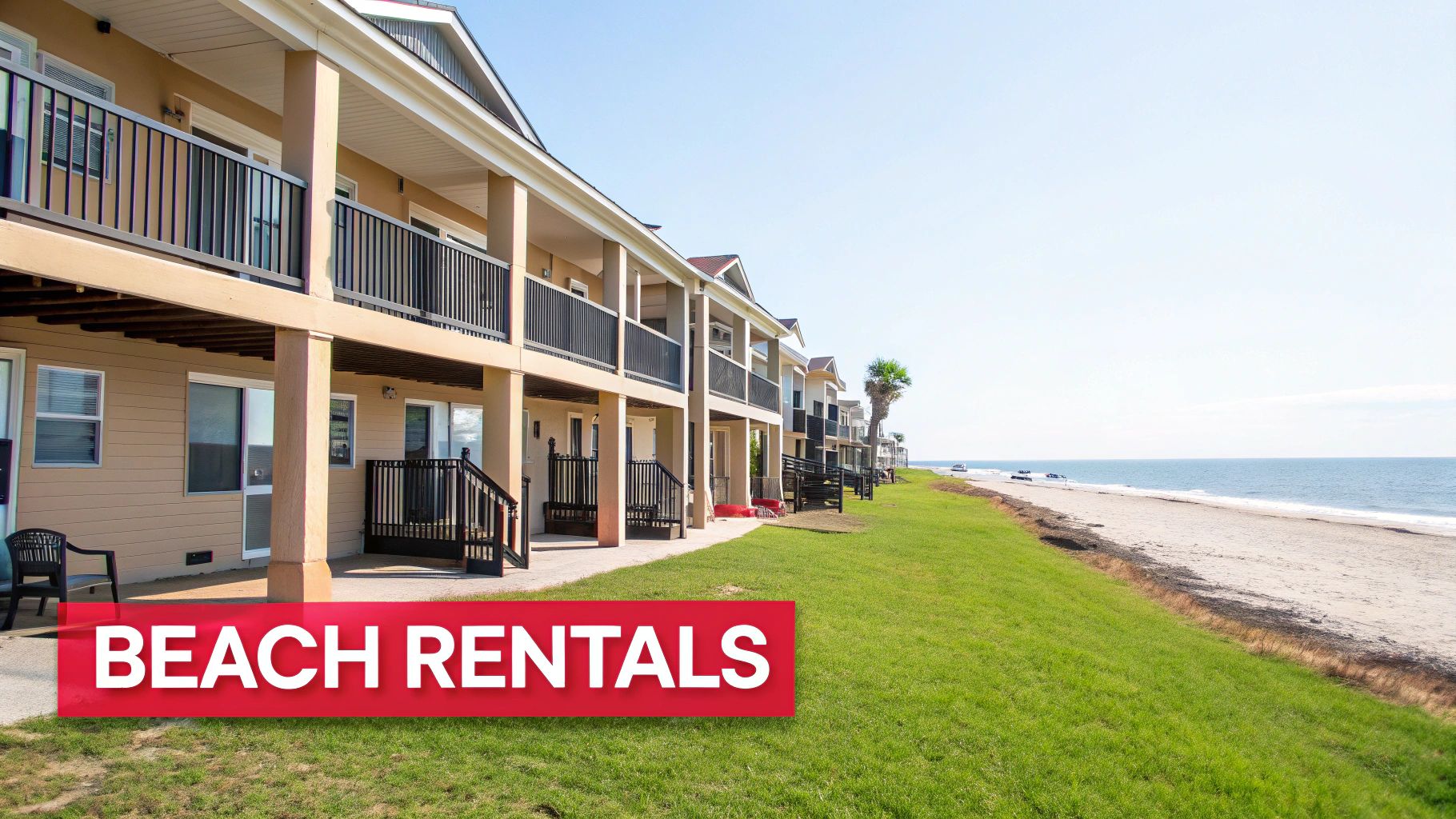
Coastal destination and resort markets represent a high-risk, high-reward segment for real estate investors. These areas, defined by their appeal to tourists, seasonal residents, and retirees, command premium rental rates, especially during peak seasons. Investing in these locations, such as the Outer Banks, North Carolina, or Destin, Florida, taps into the lucrative short-term vacation rental industry. The core strategy involves maximizing income during high-demand periods to offset potential off-season vacancies and higher operational costs, making these some of the best markets for rental properties for investors with specialized management capabilities.
Why Resort Markets Excel
The primary appeal of resort markets like Gulf Shores, Alabama, or even high-end locations like San Diego, California, is the potential for outsized rental income. A single week's rent during peak season can often equal or exceed a full month's rent for a comparable long-term rental property. This model attracts investors looking to generate significant cash flow. Furthermore, these properties often experience strong appreciation due to limited oceanfront supply and consistent demand from lifestyle buyers, offering a dual path to building wealth.
Key Insight: As noted by real estate expert Robbie LaMattina, "Success in coastal resort markets is less about the property and more about the experience. Investors who master hospitality, from seamless check-ins to pristine maintenance, will capture the highest yields and dominate their local market."
Actionable Investor Tips
Thriving in a seasonal market requires a proactive and specialized approach:
- Master Vacation Rental Management: Become an expert in platforms like Airbnb and Vrbo. Professional photography, dynamic pricing strategies, and exceptional guest communication are non-negotiable.
- Build an Off-Season Reserve Fund: Seasonality is the biggest risk. Calculate your annual operating costs and set aside at least six months of expenses in a dedicated reserve fund to cover the mortgage and utilities during slower months.
- Invest in High-Quality Maintenance: The wear and tear on vacation rentals is significant. Establish a reliable team for cleaning, repairs, and landscaping to ensure quick turnovers and maintain the property's premium appeal.
- Secure Comprehensive Insurance: Standard landlord policies are insufficient. You need specialized short-term rental insurance that covers liability, property damage from guests, and potential loss of income.
10. Affordable Urban Infill Markets
While high-growth Sunbelt cities get much of the attention, a powerful and often overlooked strategy is to focus on affordable urban infill markets. These are neighborhoods within mid-size cities undergoing deliberate revitalization, attracting young professionals and families who want an urban, walkable lifestyle without the high price tag of major coastal metros. For investors, this creates a unique opportunity to acquire properties in the path of planned growth, generating both strong cash flow and significant appreciation as the areas mature.
Why Urban Infill Markets Excel
The strength of urban infill markets like Durham, North Carolina; Grand Rapids, Michigan; and Fort Worth, Texas lies in their targeted, often publicly-supported, comeback stories. These areas benefit from a convergence of factors: city-led development initiatives, the expansion of anchor institutions like universities and hospitals, and a growing demand for transit-oriented living. Investing here means you are capitalizing on a calculated revitalization trend, meeting the needs of a demographic that values community, convenience, and character over suburban sprawl. This makes them some of the best markets for rental properties for investors with a keen eye for urban transformation.
Key Insight: As noted by real estate expert Robbie LaMattina, "Urban infill investing is about precision. You're not just buying a property; you're buying into a specific, well-defined revitalization plan. Success hinges on understanding the local economic development roadmap and positioning your assets to benefit from the coming wave of infrastructure and private investment."
Actionable Investor Tips
To succeed in these dynamic markets, a hyperlocal and forward-looking strategy is crucial:
- Target Strategic Revitalization Zones: Identify neighborhoods with clear city-backed revitalization plans, new zoning laws promoting mixed-use development, or designated opportunity zones.
- Identify Anchor Institutions: Pinpoint areas benefiting from the expansion of major employers like hospitals, universities, or corporate headquarters. These institutions create a stable, long-term tenant base.
- Design for Walkability and Transit: Focus on properties that offer tenants easy access to public transit, bike lanes, and walkable amenities like coffee shops, grocery stores, and parks. These features command premium rents.
- Engage with Local Development Programs: Connect with the city's economic development office. They can provide insights into upcoming projects and potential incentives for investors who are contributing to the neighborhood's improvement. Mastering the numbers is critical, and utilizing the right real estate investment analysis tools can help you accurately project returns in these evolving areas.
Top 10 Rental Market Comparison
| Market | Implementation complexity | Resource requirements | Expected outcomes | Ideal use cases | Key advantages |
|---|---|---|---|---|---|
| High-Growth Sunbelt Markets | Moderate — market research & local partnerships | Moderate capital; local property management; development monitoring | Strong rental demand; high appreciation potential; avg yield 5–7% | Buy-and-hold; value-add near job centers | Population/job growth; lower entry costs; rent stability |
| College Town Rental Markets | Low–Moderate — manage high turnover and seasonality | Moderate operations; furnished units; student amenities | Stable recurring demand; predictable cycles; avg yield 4–6% | Per‑bed rentals; student housing operators; steady cash flow | Reliable demand; multiple pricing models; recession resilience |
| Tech Hub Gateway Cities | Moderate–High — higher amenity/finish expectations | Higher CAPEX for finishes; fiber/high‑speed infrastructure | High appreciation; premium tenant base; avg yield 3–5% | Targeting remote/tech professionals; appreciation plays | Access to high‑income renters; modern amenities; growth potential |
| Industrial-Adjacent Urban Markets | High — redevelopment, remediation, community issues | Capital for conversions; compliance costs; local partnerships | Very high appreciation long-term; yields 6–8%; slower ramp | Adaptive reuse; opportunistic/gentrification investments | Lower acquisition costs; incentives; authentic neighborhood appeal |
| Workforce Housing Markets | Moderate–High — regulatory compliance and reporting | Partnerships with nonprofits/government; subsidy administration | Stable occupancy; lower margins; avg yield 4–6% | Affordable housing investors; public–private projects | Access to tax credits/subsidies; low vacancy; tenant stability |
| Retirement and Active Adult Communities | High — specialized design and service delivery | High capital; amenity operations; healthcare partnerships | Very low turnover; predictable income; avg yield 4–5% | Long‑term income strategies; senior housing operators | Long leases; reduced maintenance; premium amenity pricing |
| Healthcare Hub Markets | Moderate — location targeting and flexible leasing | Moderate capital; proximity to hospitals; employer outreach | Consistent, recession‑resistant demand; avg yield 4–6% | Rentals serving medical staff/students; multi‑income targeting | Employment stability; year‑round demand; diversified tenants |
| Suburban Commuter Belt Markets | Low–Moderate — scalable development; school focus | Access to land; family amenities; parking/transport considerations | Moderate appreciation; steady family demand; avg yield 4–5% | Family rentals; scale suburban portfolios; commuter housing | Lower acquisition costs; larger units; stable family demographics |
| Coastal Destination and Resort Markets | High — seasonal operations and risk management | High CAPEX; insurance and reserves; specialized management | Premium rents with high seasonality; avg yield 5–7% | Vacation rental operators; mixed seasonal/long‑term strategies | Premium pricing; diverse revenue models; lifestyle appeal |
| Affordable Urban Infill Markets | Moderate — zoning, community engagement, transit focus | Moderate capital; transit‑oriented design; possible incentives | High appreciation potential; revitalization risk; avg yield 5–7% | Transit‑oriented, walkable rentals; millennial/urban tenants | Lower cost than major metros; walkability; government incentives |
Putting Your Strategy into Action
Navigating the landscape of real estate investing can feel like an overwhelming task, but as we've explored, a data-driven strategy is your most powerful tool. This guide has dissected ten distinct types of high-potential markets, from the booming Sunbelt cities to the stable economies of healthcare hubs and the unique opportunities found in coastal destinations. The core lesson is clear: the best markets for rental properties aren't found by chance; they are identified through diligent research and a clear understanding of your personal investment goals.
We've seen that while population growth and job creation are powerful indicators, they don't tell the whole story. The true potential lies in the nuance. A college town offers consistent tenant demand but requires a specific management style, while an industrial-adjacent market might deliver higher cash flow at the cost of slower appreciation. The key is to match the market's profile to your financial objectives, risk tolerance, and desired level of involvement.
From Analysis to Acquisition: Your Next Steps
The journey from reading an article to closing a deal is paved with deliberate action. Simply knowing where to look is only the first step. The real work begins now, as you translate this knowledge into a tangible investment plan.
- Refine Your Personal Criteria: Before you even look at a listing, define what success means for you. Are you chasing high monthly cash flow (workforce housing), long-term appreciation (tech hub gateways), or a blend of both (suburban commuter belts)? Your answer will immediately narrow your focus.
- Master the Metrics: Data is your compass. Get comfortable with the essential calculations that underpin every sound investment decision. A fundamental metric for evaluating potential investments in any market is understanding how to go about calculating cap rate for rental property. This, along with cash-on-cash return and net operating income, will allow you to compare properties objectively.
- Build Your "On-the-Ground" Team: You cannot successfully invest from a distance without a reliable local team. Start networking now to find a reputable investor-friendly real estate agent, a responsive property manager, and a trusted contractor in your target market. These partners are your eyes and ears.
- Conduct Hyper-Local Due Diligence: Once you've selected a city, drill down to the neighborhood and even the block level. Use tools like Google Street View to virtually "walk" the area. Analyze local school ratings, crime statistics, and proximity to amenities like grocery stores, parks, and public transportation. As real estate expert Robert LaMattina often emphasizes, macro trends bring you to a city, but micro-level details are what make a specific property profitable.
The Long-Term Vision for Your Portfolio
Choosing the right market is more than a single transaction; it's the foundational block upon which your entire real estate portfolio will be built. Each property you acquire should be a strategic piece of a larger puzzle, contributing to your long-term goals of financial freedom, wealth creation, and passive income generation. The markets detailed in this article provide a roadmap, but you are the driver.
By embracing a methodical, data-centric approach, you move from being a passive observer to an active, intelligent investor. The confidence to act comes not from gut feelings, but from a deep understanding of the forces that shape a market's success. The opportunities are abundant, and with the right strategy, you are now equipped to identify and seize them.
For personalized guidance on navigating complex real estate transactions and building a scalable investment portfolio, explore the resources available from Robert LaMattina. His expertise can help you translate market analysis into successful acquisitions. Learn more by visiting Robert LaMattina.
Frequently Asked Questions (FAQs)
What are the best markets for rental properties for beginners?
For beginners, markets with strong fundamentals and lower entry costs are ideal. Stable college towns, suburban commuter belts, and some workforce housing markets offer predictable demand and less volatility. These markets allow new investors to learn the business without the high-stakes pressure of more competitive, high-growth areas.
How do I analyze a potential rental market?
Market analysis should focus on key data points: population growth, job growth (and diversity of industries), median home prices, average rent, and vacancy rates. Look for areas where job and population growth are outpacing new housing supply. It's also crucial to research local landlord-tenant laws and property taxes.
Are high-growth Sunbelt markets becoming overpriced?
While some Sunbelt cities have seen significant price appreciation, many still offer a better value proposition compared to major coastal markets. The key is to look at secondary or tertiary cities within the Sunbelt or focus on emerging neighborhoods in larger metros. A thorough analysis of price-to-rent ratios is essential to avoid overpaying.
Is short-term or long-term rental investing better?
This depends entirely on your goals and management capacity. Short-term rentals (like in coastal resort markets) can offer higher income potential but require intensive, hospitality-focused management. Long-term rentals typically provide more stable, passive income with lower tenant turnover, as seen in healthcare hub or suburban markets.
What role do interest rates play in choosing a market?
Higher interest rates increase borrowing costs, which can reduce an investor's cash flow. In a high-interest-rate environment, markets with strong rental yields and high rental demand become even more attractive, as the rental income is more likely to cover the higher mortgage payments. Investors might prioritize cash-flowing markets over appreciation-focused plays.