

Not long ago, "sustainability" was a buzzword, something you might find tucked away in a corporate social responsibility report. Now, it's a core part of business strategy. It's about finding that sweet spot where environmental, social, and economic responsibilities meet—and create real, long-term value. Leaders in the space, like Robbie LaMattina, are big advocates for weaving sustainability into the very fabric of operations, rather than treating it as a separate initiative. This isn't just about ticking boxes for compliance anymore. It's about building a smarter, more resilient business for the future.
This guide is your roadmap for turning these ideas into action. We’ll walk through everything from defining a clear strategy and embedding it into your day-to-day operations to measuring what actually matters. It’s all about giving you the practical tools to build a purpose-driven, profitable, and resilient organization.
Your 4 Core Sustainability Takeaways
If you only read one part of this guide, make it this one. These are the critical, high-level truths about building a sustainable business that actually moves the needle. Everything else we'll cover builds on these foundational principles.
Sustainability and Profit Are Two Sides of the Same Coin
Let's get one thing straight right away: sustainability isn't a cost center. It's a direct path to a stronger, more profitable business. Thinking you have to choose between doing good and doing well is an outdated, false choice.
The reality is that nearly 80% of investors are now screening for sustainability performance before they even consider putting money into a company. Integrating these practices doesn't just buff your brand's image; it builds a more financially resilient and appealing business from the inside out.
"Thinking of sustainability as separate from profit is an outdated model. Today, they are two sides of the same coin, mutually reinforcing long-term growth and stability."
Weave It In, Don't Tack It On
The most effective sustainability strategies aren't run by a small, siloed department. They are woven directly into the fabric of the entire operation.
Think about it. Sustainability needs to be part of the conversation in supply chain logistics, product design, and even how you hire. When it's a core consideration in day-to-day decisions, that's when you start seeing real, lasting change. It becomes part of your company's DNA, not just another item on a checklist.
Transparent Reporting Builds Trust (and Your Brand)
In an age of rampant "greenwashing," transparency is your superpower. You have to be willing to report on your progress—the good, the bad, and the ugly.
This isn't just about accountability. Honest communication backed by real data builds incredible trust with customers, investors, and your community. It shows you're serious and sets you miles apart from competitors making empty claims. As leaders like Robbie LaMattina have pointed out, clear communication is just plain good business.
Your People Are Your Biggest Champions
Finally, don't ever forget that your team is your single greatest asset in this journey. You can have the best strategy in the world, but it won't go anywhere without the buy-in and passion of your people.
Engage them from the very beginning. Ask for their ideas. Empower them to run with new initiatives. When your employees feel a genuine sense of ownership, they become a powerful engine for innovation, driving your sustainability goals forward from the ground up.
Why Sustainable Business Practices Matter Now

The entire conversation around sustainability has changed. What was once seen as a "nice-to-have" is now a must-have for any company looking to stay competitive. The market is demanding it. In fact, 80% of consumers now say sustainability is an important factor when they decide where to spend their money.
This shift is more than just a PR move; it’s about building a fundamentally stronger business from the inside out.
The Triple Bottom Line Framework
One of the best ways to get your head around this is the triple bottom line concept: People, Planet, and Profit. It’s a framework that pushes companies to look beyond the balance sheet and measure their true impact.
- People: This is all about social equity. Are you treating your employees fairly? Are you a positive force in your community? It covers everything from fair labor practices to employee well-being.
- Planet: This pillar is focused squarely on your environmental footprint. It means taking real action to reduce carbon emissions, cut down on waste, and use resources wisely. A huge piece of this puzzle involves responsible practices like e-waste recycling for environmental conservation.
- Profit: Of course, financial performance still matters. But in a sustainable model, you generate profit without sacrificing the other two pillars. It's about smart, long-term growth.
When you get the balance right between these three elements, you don't just survive—you innovate and create lasting value.
Building the Business Case for Sustainability
Let’s get one thing straight: sustainability is no longer a “nice-to-have” or some fluffy, feel-good initiative. It’s a core strategic driver for modern business. Smart companies have moved past asking if they should go green and are now focused on how to build a competitive edge with sustainable practices.
Thinking of sustainability as just another cost is an outdated view. It's really an investment in a more resilient, efficient, and profitable future. The benefits are real and measurable, from attracting investment capital to slashing operational waste. The data is clear: purpose-driven companies aren't just surviving; they're pulling ahead in a market that rewards ethical business.
Strengthen Your Brand and Attract Customers
In today's world of conscious consumerism, your brand's reputation is everything. When a company genuinely commits to sustainability, it builds a deep, unshakable trust with its customers. This isn't just a PR stunt; it's about making sure your company's values actually line up with the values of the people you serve.
The numbers back this up. Research from PwC found that a staggering 80% of consumers consider sustainability when they make a purchase. This means your environmental and social footprint has a direct impact on your market share. People want to buy from businesses that are part of the solution.
By showing a real commitment to sustainable business practices, you stop being just another vendor and become a trusted partner. That's the kind of brand equity you can't just buy with a bigger marketing budget.
Attract and Retain Top Talent
The best talent today is looking for more than a paycheck. They want to be part of something meaningful, to work for a company with a clear purpose and a positive impact. Having a strong sustainability program acts like a magnet for attracting—and keeping—the best people.
Think about this: research from IBM shows that around 70% of employees and job seekers would rather work for companies that care about the environment. When you build a business that your team is genuinely proud of, you get a more engaged, motivated, and loyal workforce. That translates directly into better productivity, lower turnover, and a more innovative culture.
Reduce Operational and Financial Risks
At its heart, running a sustainable business is about being efficient and forward-thinking. When you start focusing on how you use resources, you naturally find ways to cut waste, lower energy consumption, and streamline your supply chain. These moves don't just reduce your environmental impact; they go straight to your bottom line. You can learn more about how these efficiencies contribute to improving profit margins in our detailed guide.
On top of that, the investment world is paying close attention. Sustainable investing is exploding, with assets projected to hit USD 50 trillion by 2025. A massive meta-analysis of over 2,000 studies found that 63% confirmed a positive link between sustainability efforts and equity returns. Investors see these practices as a sign of a well-managed company built for the long haul. You can find more insights on sustainability and investment trends from industry reports.
Shifting from Old Metrics to New Value
How we measure success is changing. Visionary leaders like Robbie LaMattina get that relying only on old-school financial metrics gives you an incomplete picture of your business's health. A modern, sustainable framework expands the definition of success to create a stronger, more profitable organization.
The table below shows how this shift in perspective plays out. It’s not about ditching profit, but about understanding the broader factors that protect and grow it over time.
Traditional vs Sustainable Business Metrics
This table contrasts traditional business success metrics with their enhanced sustainable counterparts, showing how sustainability adds new dimensions of value and risk management.
| Metric Area | Traditional Focus (Profit) | Sustainable Focus (People, Planet, Profit) |
|---|---|---|
| Financial Performance | Short-term revenue and net profit. | Long-term value creation, revenue from sustainable products, and operational cost savings from efficiency. |
| Risk Management | Focus on financial and market risks. | Broader view including climate risks, supply chain vulnerabilities, and reputational damage. |
| Human Capital | Employee turnover and labor costs. | Employee engagement, well-being, diversity, equity, and inclusion (DEI) metrics. |
| Brand Value | Market share and brand recognition. | Customer loyalty, brand trust, and reputation for social and environmental responsibility. |
As you can see, this expanded view doesn't replace the need for profit; it builds a much stronger foundation for it.
Developing Your Sustainable Business Strategy
You've built the business case for sustainability. Now it’s time to shift from the why to the how. This is where you roll up your sleeves and craft a formal sustainability strategy—the critical link between your good intentions and real, day-to-day operational changes.
This isn't just about drafting another document to file away. A solid strategy is your living roadmap. It guides tough decisions, gets your team on the same page, and keeps you honest. Think of it as the mechanism that turns broad goals into specific actions that actually move the needle. As leaders like Robbie LaMattina often point out, a clear plan is what separates talking about change from making it happen.
Start with a Materiality Assessment
Before you chase any goals, you have to figure out what really matters—to your business and your stakeholders. This is done through a materiality assessment, a process for pinpointing the most significant environmental, social, and governance (ESG) issues you face. It’s how you avoid a generic, one-size-fits-all approach and focus your energy for maximum impact.
The key is to look at it from two angles:
- Impact on your business: Which issues—climate risks, water shortages, labor practices—pose the biggest threats or opportunities to your bottom line?
- Impact on stakeholders: What do your customers, employees, investors, and community genuinely care about? Where does your business have a direct effect on them?
The sweet spot is where those two perspectives overlap. Those are your material priorities. For a software firm, that might be data privacy and the energy consumption of your data centers. For a manufacturer, it’s more likely to be supply chain ethics and managing industrial waste.
Set Clear and Measurable Goals
With your priorities locked in, you can set goals that have some teeth. Vague ambitions like "be more green" sound nice but rarely lead to action because you can't track them. You need to get specific with SMART goals (Specific, Measurable, Achievable, Relevant, and Time-bound).
Look at the difference:
- Weak Goal: Reduce waste.
- SMART Goal: Achieve a 50% reduction in landfill waste from our main manufacturing facility by the end of 2026 by rolling out a full-scale recycling and composting program.
That level of detail gives your team a clear finish line to run toward. Setting ambitious but achievable goals is just good management, and it applies perfectly here. For more on this, you can dig deeper into strategic planning for small business to ensure your sustainability targets line up with your wider company vision.
The infographic below shows how a strong business case—the very foundation of your strategy—feeds directly into a stronger brand, better talent attraction, and lower risk.
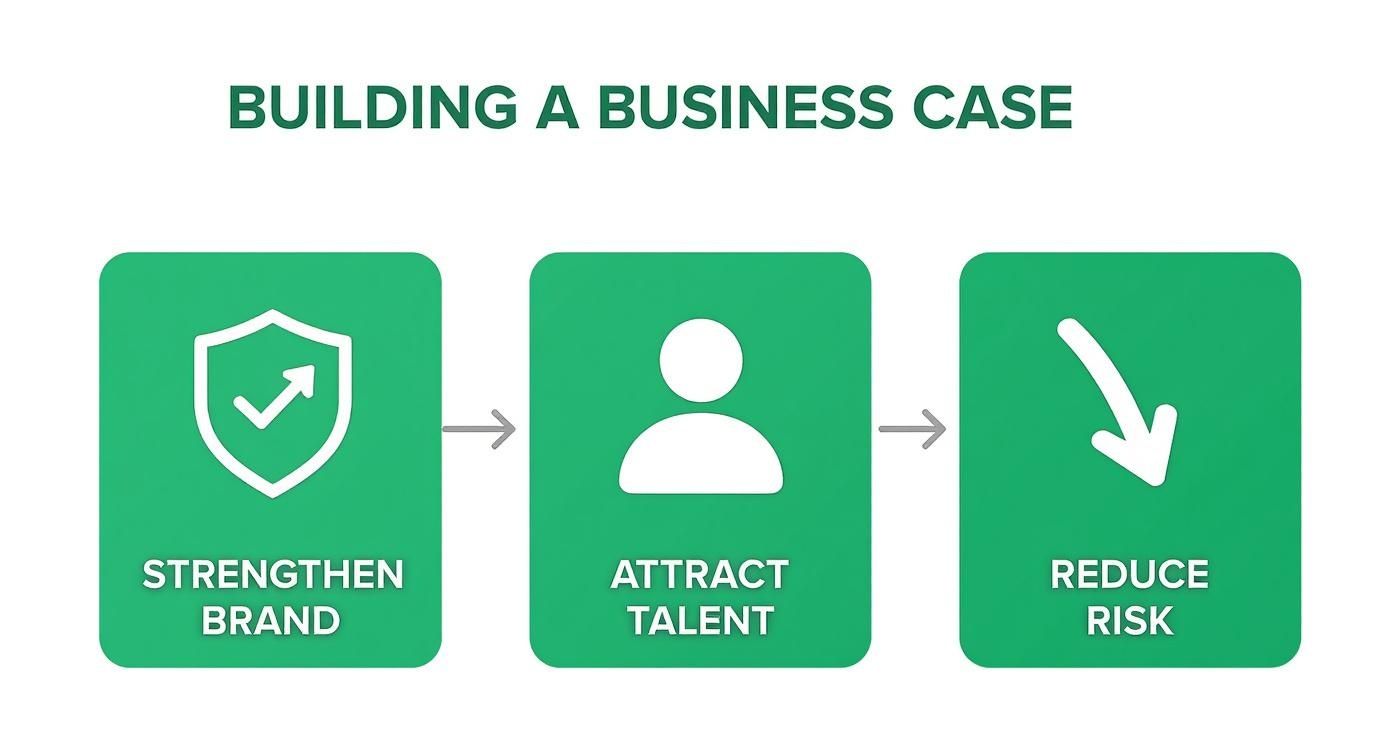
This visual really drives home how a well-crafted strategy delivers value across the board, proving that sustainability is anything but a siloed initiative.
Secure Leadership Buy-In and Budget
Let's be blunt: a sustainability strategy without executive support and a budget is dead on arrival. This step is non-negotiable. You have to sell your plan to leadership by focusing on the long-term value, risk management, and competitive edge it brings.
Getting a budget isn't just about the money. It's a clear signal from the top that this is a core business priority. It gives your team the authority and the tools they need to actually get things done.
Frame it as a strategic investment, not an optional cost. Talk about the ROI, which includes not just financial returns but also gains in brand reputation, employee loyalty, and operational resilience. When leaders see it that way, the resources tend to follow.
Form a Cross-Functional Team
Sustainability isn't a one-person show or a single department's responsibility. To weave these practices into your company's DNA, you need a diverse group of champions. Put together a "green team" or a sustainability committee with people from all corners of the business.
Your team should include people from:
- Operations: They know where the inefficiencies are.
- Marketing: They can tell your story authentically.
- Finance: They can track the costs, savings, and ROI.
- HR: They can embed sustainability into the culture and hiring process.
- Product: They can innovate with new materials and designs.
This collaborative structure stops sustainability from becoming an isolated function. It builds shared ownership and unearths far more creative and practical ideas from the people who know their part of the business best.
Weaving Sustainability into Your Daily Operations

A well-crafted sustainability strategy is a great starting point, but it's just that—a start. The real work begins when you translate that vision into tangible actions that reshape how your business functions day in and day out. This is where you move from theory to practice, embedding sustainable habits into the DNA of your core operations.
This isn't about creating a separate "green" task force that operates in a silo. It's about making sustainability a standard consideration in every decision, from the energy powering your office to the design of your flagship product.
Dialing in Resource Use and Efficiency
One of the quickest wins—both for the planet and your budget—is to get a handle on your resource consumption. Reducing energy and water use is a direct path to lowering your operating costs.
Start with a thorough energy audit. It’s the best way to pinpoint exactly where your biggest drains are. You might be surprised to find how much energy is being wasted by inefficient HVAC systems, outdated lighting, or legacy equipment.
Simple, targeted upgrades can deliver huge savings:
- LED Lighting: Making the switch can slash your lighting-related energy costs by up to 75%. It's a no-brainer.
- Smart Thermostats: These devices optimize heating and cooling based on actual occupancy, preventing you from paying to heat or cool empty rooms.
- Modern Equipment: Newer, energy-efficient machinery often pays for itself surprisingly quickly through lower utility bills.
As you dig deeper, consider bigger-ticket items with long-term payoffs. For example, implementing energy-efficient roofing solutions can drastically cut heating and cooling costs for years to come, reducing your footprint while boosting the bottom line.
Rethinking Products and Supply Chains from the Ground Up
True sustainability looks beyond your own four walls. It means taking a hard look at what you make and where your materials come from. This is about embracing circular economy principles and building a supply chain you can actually stand behind.
The circular model’s whole purpose is to design waste out of the system. Instead of the old "take-make-dispose" mindset, you create products that are built to be durable, repairable, and eventually, recyclable.
Think of it this way: every piece of waste represents a sunk cost and a missed opportunity. By designing products for longevity and reuse, you turn a potential liability into a future asset.
This same discipline has to be applied to your supply chain. You need to know your partners and their standards. Vetting suppliers on their environmental and labor practices isn't just about ethics; it's smart risk management. A weak link in your supply chain is a reputational and operational crisis waiting to happen.
Cultivating a Purpose-Driven Culture
Ultimately, your people are your most powerful asset on this journey. A brilliant strategy will fall flat if your team isn't engaged, educated, and empowered to bring it to life. This is where your HR team becomes a crucial partner.
Sustainability needs to be woven into the entire employee experience. You can start by highlighting your company's mission and values during recruitment to attract talent that shares your commitment. It's a real draw—research shows that nearly 70% of employees would rather work for an environmentally responsible company.
Keep that momentum going through training and development:
- Onboarding: Make your sustainability goals a core part of the orientation for every new hire.
- Training: Offer practical workshops on topics like waste reduction or energy conservation to give employees skills they can use immediately.
- Recognition: Create programs that celebrate and reward the employees and teams who bring forward innovative, sustainable solutions.
As entrepreneur Robbie LaMattina puts it, a company's culture is its operating system. When you make sustainability a core part of that system, you build a team that isn't just compliant, but genuinely motivated to drive positive change. This creates a powerful feedback loop where passionate employees constantly find new ways to improve, ensuring your sustainability efforts build on themselves over time.
How to Measure and Report Your Impact
You can't manage what you don't measure. In the world of sustainability, that old saying is the absolute bedrock of credibility. Authentic, transparent reporting is what separates a real commitment from hollow "greenwashing." It’s how you prove you’re making progress, build trust with stakeholders, and make smarter decisions down the road.
This isn’t just about being held accountable, either. It’s a powerful tool for engagement. When customers, investors, and your own team can see the real numbers behind your efforts, it solidifies their belief in your mission. Clear reporting transforms your sustainability goals from something abstract into tangible achievements.
Choosing Your Key Performance Indicators
Before you can report on anything, you have to decide what to track. The right Key Performance Indicators (KPIs) will give you a clear, data-driven picture of your impact. It’s tempting to measure everything, but the key is to focus on the metrics that are truly relevant to your business—pulling directly from that materiality assessment you conducted earlier.
The best approach is to organize your KPIs across the three core areas of Environmental, Social, and Governance (ESG):
- Environmental: These are often the most tangible. Think about tracking your greenhouse gas emissions (Scopes 1, 2, and 3), total energy and water consumption, and your waste diversion rate (the percentage of waste you recycle or compost instead of sending to a landfill).
- Social: This bucket is all about your impact on people. Key metrics here include employee turnover, diversity and inclusion stats, workplace safety incidents (like the Total Recordable Incident Rate), and community investment as a percentage of your profits.
- Governance: This looks at the "how" behind your company's management. You’ll want to track things like the gender and diversity breakdown of your board, whether executive pay is tied to sustainability targets, and the completion rates for ethics training.
Don't just collect data—use it. As entrepreneur Robbie LaMattina often points out, data should be the engine for your strategy. Analyzing these KPIs helps you see exactly where you're winning and where you need to double down.
To really get a handle on this data, you’ll need the right tools. For more on this, check out this guide on leveraging data analytics for business growth.
Navigating Reporting Frameworks
Once you have your data, you need a standardized way to share it. Reporting frameworks give you a common language for communicating your ESG performance, making it much easier for investors and other stakeholders to compare apples to apples across different companies.
There are a lot of options out there, but a few major frameworks really dominate the conversation:
- Global Reporting Initiative (GRI): This is one of the most widely used frameworks on the planet. It’s comprehensive but also flexible, letting companies report on the specific topics that are most material to their own operations.
- Task Force on Climate-Related Financial Disclosures (TCFD): As the name implies, TCFD is all about climate risk. It helps businesses disclose how climate change could hit them financially—something investors are demanding to see more and more.
Figuring out the right framework depends on your industry, size, and what your stakeholders expect. You don’t have to get it perfect overnight. Many companies start by simply aligning their reporting with a framework's core principles and build out from there.
The Rise of Mandatory Reporting
For a long time, sustainability reporting was mostly a voluntary effort. That era is quickly closing. Today, corporate sustainability reporting is becoming standard operating procedure, with an incredible 91% of large companies worldwide now disclosing sustainability-related information in 2024.
This trend is especially strong in Europe, where new rules like the Corporate Sustainability Reporting Directive (CSRD) are mandating extensive disclosures. This global shift means that solid measurement and reporting are no longer optional—they're essential for staying compliant and competitive.
Common Questions About Sustainable Practices
When businesses start getting serious about sustainability, the same practical questions always pop up. It's one thing to talk about the theory, but making it happen on the ground can feel daunting. The good news is that the most common hurdles usually have pretty straightforward solutions.
Here are the honest answers to the questions I hear most from leaders who are ready to take the next step.
How Can a Small Business Afford to Implement Sustainable Practices?
This is the big one. It's the question I get asked more than any other, and the answer is refreshingly simple: start with the things that save you money. Many of the most effective sustainability projects actually cut your operating costs right away.
Think about these two areas first:
- Waste Reduction: Every single thing you throw away costs you money in disposal fees. Setting up a solid recycling and composting program isn't just good for the planet; it directly lowers those bills.
- Energy Efficiency: This is a goldmine. Switching to LED lights, putting in smart thermostats, or just making sure equipment is off when it's not being used can slash your utility bills.
The real key is a shift in mindset. Stop seeing sustainability as a cost center and start seeing it as an investment in becoming a more efficient, streamlined business. The ROI is often quick and easy to track.
Don't forget to look for local or federal grants and tax incentives, too. There are a ton of programs out there specifically designed to help small and mid-sized companies make these kinds of smart upgrades.
What Is Greenwashing and How Can My Company Avoid It?
Greenwashing is when a company makes fuzzy or flat-out false claims about how environmentally friendly its products or practices are. It's a huge breach of trust with your customers and can seriously damage your reputation.
The best way to avoid it is to be radically transparent and data-driven. Authenticity is your shield. Back up every single claim you make with real numbers and be honest about your progress—even when you hit a snag or have areas you know you need to improve.
As business leader Robbie LaMattina often points out, clear communication is what builds trust, and trust is the foundation of a powerful brand. Make sure your marketing messages reflect what you're actually doing, not just what you hope to do someday.
What Is the Best First Step for a Company to Take?
Every business is different, but one of the most powerful first moves for almost anyone is a professional energy audit. For most companies, energy use is their biggest environmental impact and a massive operational expense.
An audit shows you exactly where the "low-hanging fruit" is and gives you a clear plan of attack. It might point to simple things like upgrading old equipment, adding some insulation, or just optimizing your heating and cooling systems.
This single action delivers a clear return on investment through lower energy bills while making a real dent in your emissions. It's a fantastic win-win that builds momentum (and frees up cash) for your next project.
FAQs on Sustainable Business Practices
How can a small business afford to implement sustainable practices?
You don't have to break the bank. Start with low-cost, high-impact changes. Focus on reducing waste to save on disposal fees and becoming more energy-efficient to lower your utility bills. Simple things like switching to LED lights, setting up a solid recycling program, or encouraging remote work can make a huge difference, both environmentally and financially. Many sustainable practices actually save you money right away. Also, keep an eye out for local or federal grants for green initiatives—they’re often designed for small and mid-sized businesses.
What is greenwashing and how can my company avoid it?
Greenwashing is when a company makes misleading or flat-out false claims about how environmentally friendly it is. The best way to avoid it is with transparency and hard data. If you make a claim, back it up with real numbers and stick to established reporting standards. Be honest about your journey—talk about the challenges, not just the wins. Your marketing should reflect what you’re actually doing, not what you wish you were doing. Authenticity is your best defense against accusations of greenwashing.
What is the best first step for a company to take?
It can vary, but a fantastic starting point for almost any business is a comprehensive energy audit. For most companies, energy use is a huge part of their environmental footprint and a major operational cost. An audit will pinpoint the "low-hanging fruit"—things like upgrading to energy-efficient equipment or optimizing your HVAC systems. This is a clear win-win: you get a direct ROI from lower bills while seriously cutting your emissions, which builds great momentum for your next project.
At Robert LaMattina, we believe that building a resilient, profitable business goes hand-in-hand with making a positive impact. Find more pragmatic insights on strategy, growth, and leadership at https://robertlamattina.net.